Saturday, February 13, 2016

Chapter 59 - My Thoughts & the Lies They Tell Me

A Jihadi extremist walks into a crowded restaurant with explosives strapped under his coat. His thoughts tell him that the people around him are his enemy; his God will reward him for destroying them and furthering his cause. He pushes the remote that sets off the explosives that tears apart his own flesh as well as those who are close by.

Although this is a very extreme example, are we not all victims of our thoughts. When I was twelve, I thought my parents didn’t love me. This made me feel very sad and was responsible for some silly, bad behavior. It wasn’t until sometime later that I began to see how much my parents loved me, and the sacrifices they made, not only for me, but also for my brothers and sisters. This changed everything about our relationship and my behavior.

Our thoughts are often full of judgements, fears, doubts, worries. Our minds are filled with negative voices and pictures of what could go wrong. Experiencing life through our busy thoughts is often unpleasant. Even if our thoughts are positive, if they do not reflect reality, they can and will lead to disappointment because they only portray fantasy.

There’s a funny quote that I found when I turned sixty:

"When you're 20, you care what everyone thinks; when you're 40, you stop caring what everyone thinks; when you're 60, you realize that no one was thinking about you in the first place." ~ Unknown
Built into our thoughts is this very strong sense that they are true. We don’t question our thoughts because we assume they are who we are. But are they true? Are they really who we are? And when we believe them to be true — a part of who we are — how do they affect us? Do they lead to inappropriate and destructive behavior?

Richard Rohr, in his on-line course on the Twelve Step program called Breathing Under Water, says: "We all take our own patterns of thinking as normative, logical, and surely true, even when they do not fully compute. That is the self-destructive nature of all addiction and of the mind, in particular. We think we are our thinking, and we even take that thinking as utterly 'true,' which removes us at least two steps from reality itself."


As a young person growing up on a farm in Eastern Canada during the fifties, I saw and experienced a lot of poverty. I recall a time when I asked my parents for a bike. I was told that they couldn’t afford it. Words I heard often and they were true at the time. Now that I’m sixty plus, not rich but financially secure, I still hear that voice when buying something I don’t necessarily need: I can’t afford it.

But it’s a lie; I can afford it. When the stock market goes down, (as it has a lot over the last decade) my thoughts are: My God, I’m going broke. But it’s a lie. The money I have invested in the market is money I don’t really need. But still, when the market go down, I feel depressed as if some impending disaster is just around the corner.

Meditation and Kundalini are teaching me to stop listening to my thoughts, and the lies they tell me. Kundalini has revamped things inside so that I am learning to listen to the more subtle voice that exists at a much deeply level than the chattering mind. This inner witness and its connection with the mystery that lies beyond it are able to observe the ramblings of the mind, to pick and choose what to accept and what to reject. They enable me to see how truly good life is, how supportive and trustworthy it is when I don’t allow meaningless thoughts, and the lies they tell, to lead me in directions I never wanted to go in the first place.


Thoughts, images, voices, constructs, conditioning, beliefs are transit visitors that protrude into our lives. They arise and they fall. They are not permanent. They are not you. When we learn to observe them, and not become attached to them, we can follow them or let them go. We can build the life that we want for ourselves.

Thursday, December 17, 2015

Chapter 58 -Becoming Overly-Identified with Our Beliefs

The commonly held definition of “belief” as found in the dictionary is: A firm opinion or conviction; an acceptance of a thing, fact or statement; a person’s religion or religious conviction. Some would argue that their belief is the “absolute truth.”  The question that comes to my mind when a statement like this is professed: If your belief is an absolute truth, then why does it sometimes change? Why does a transformation process like kundalini rising break down, modify, and even eradicate beliefs previously held? 


Over the years, my own beliefs have radically changed and continue to do so. I grew up in a family where religion was neither emphasized nor a concern, however, the culture of the Eastern Canadian farm community did leave an impression on me that continues to this day. My early identity was shaped by the families and neighbors who worked independently but at the same time depended on each other for many tasks that couldn’t be handled alone.
During my early working years in the city, through the positive influence of people who were important to me, I began a journey into the Catholic Christian faith tradition, which impacted and changed my life in a substantial way. By my mid-thirties, I was engaged in part-time ministry, as well as full time employment and family life. My identity was being shaped by many formation programs and retreats, as well as a ministry that moved me in a radically different direction from my days on the farm.  Christian meditation and meditation retreats became my means of maintaining a focus on what I thought was important. They were a way to affirm my beliefs in the Catholic faith. It’s not that I never questioned certain beliefs of the Church that made no sense; I often did. These apparent differences were dismissed on the basis that wiser teachers knew far more than I did; some things just had to be accepted by faith
In my mid to late fifties, Kundalini rising was the next dramatic turn that blew a hole into my many deeply ingrained thought patterns and beliefs. Kundalini leaves few stones unturned. Its energies modified and dismantled many of the images and constructs that had served to define my identity and give me a sense of who I was in relation to the world and those around me. It was as if the world as I previously knew it had collapsed. My identity had been substantially modified. Many of the beliefs that motivated me to act in a certain way disappeared. I was left confused and bewildered, but also with a great sense of spaciousness, wonder and freedom. The world as I previous saw it had changed, and I knew there was no way I could ever go back to the way it was before. And I didn't want it to.

                 
In her book “Returning To Essence,” Gina Lake describes beliefs as deeply held patterns of thought that structure our experience. She says that because we believe something, we behave accordingly. Most activities we engage in are based on our beliefs. Those who have different beliefs and values spend their time doing different things. Beliefs form the basis of our identity. They give witness to who we are. But when our beliefs change, our identity changes with them. She writes:

"Our beliefs actually create the situation they describe. That's why it is said that we create our own realty: Our beliefs determine our reactions to life and our choices and therefore our experience, and our experience reinforces our beliefs. Once you realize that, you can choose whether to listen to this version of you and of your life, or not."

All of this, if you think about it carefully, is tied to ego. Our ego is defined by the identities and roles that we assume, how we see ourselves in the exterior world. So our beliefs, when acted out in the stage of life, maintain this ego definition.


When I examine the patterns of change in beliefs in my own life, I must conclude that beliefs in themselves, like thoughts, are not the problem. The problem comes when we become too attached to them. When we become too attached to our beliefs, they may crystallize to form something that is rigid and inflexible. When we become too attached, there is a danger that they become our “absolute truth.”  This “absolute truth” then begins to prepare its defense to justify itself. There is a danger of becoming like the Scribe or the Pharisee we read about in the Gospels, a person who allows ego beliefs to become God; and then looks, in judgement, for anyone who does not share that same belief. Are we not seeing this play out in the world today?

Our beliefs need to be examined often and treated more lightly. Those that no longer serve a useful purpose, that no longer lead to a further evolution of consciousness, must be let go, and replaced with something else. Where possible, kundalini would be glad to do this for us.

In meditation, we practice observing our thoughts, seeing them come, seeing them change, seeing them go. They are a phenomenon of the mind, empty of any permanence. We discover that we are not our thoughts. Our inner witness or observer gives testimony to this.
  

In the same manner, we must practice observing our beliefs. They come, they change, they go. They also are a phenomenon of the mind, empty of permanence. In this manner, our inner witness can become an instrument of compassion, not of judgement, with those who do not share our particular beliefs.      

Friday, November 20, 2015

Chapter 57 Going Back To The Baiscs

In the search for the pathless path towards greater awakening, sometimes we find that much is gained by going back to the basics of meditation. The search, particularly if it is done through the Jnana path (the path of wisdom and self-inquiry) can often lead to frustration as we periodically discover that we have again missed the mark, or question whether we have moved at all in our spiritual quest. And what is this quest all about anyway?

purity of the lotus flower represents the pratice of meditation

The other day, I went through a simple exercise which brought me to an awareness that everything is all right just the way it is: I am all right just where I am. And the striving, and the frustration that results from ego involvement in the awakening process, is perhaps the very thing that must fall by the wayside. What I found most surprising about this simple exercise is that it contains nothing that I did not know before. I learned nothing new, yet it was renewing. I would like to take you through this simple exercise. 

First, sit comfortably in a relaxed but alert position, back straight. Prop yourself up with pillows if necessary. Allow the ordinary preoccupations of the day to settle down and subside. Look around you. Is the place familiar to you? If not, no matter. Begin to cultivate a sense of yourself as being present in that place. You are here in this one space. The world, and everything else in it, the sensible world, is outside you, around you.


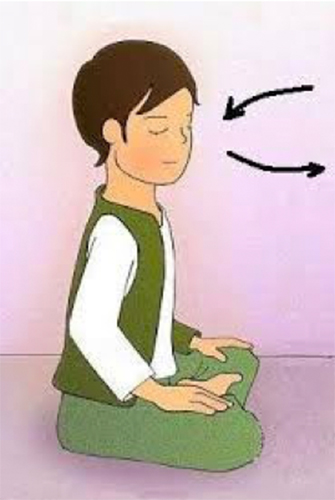
As you close your eyes, direct your attention to your body. What sensations are you aware of: breath, heartbeat, feelings in your back and backside as it presses against the chair or floor? Visualize your breath flowing into your nostrils down the center cavity of your body, down to the bottom and up again. Tie your consciousness to your breath and pay attention to the circular flow of the breath (down, around, up).  If you pay further attention, you'll catch a glimpse of something deeper, two things:
  • The experience (the muscle sensation of movements)
  • And the “I” that is experiencing it.


Now along with the muscle sensation of movement (the experience) also note the river of thoughts, images, emotions that are probably coursing through the front of your mind.  You may try to stop this mental chatter, but you will probably fail. All these thoughts, images, memories, ideas, plans, whatever, will continue whether you choose to let it or not. This is how the mind functions. But now again, observe two things: First, this functioning of the mind (images, memories, ideas, thoughts, plans) as the experience, and subtly in the background, the “I” that is experiencing them. As you continue, the most intimate feelings and desires will occasionally be there like images on a screen, accompanied by the “I” experiencing, watching, as they pass by.

If you can remain in this quiet, relaxed but alert state, you may gain a deeper awareness of a sense of something very small growing in you — the experiencer.  Even though this “something small” has no volition or power of its own, it quietly observes and experiences all that passes by. If you look for this “something small” observer, you will find that it continually recedes further and further away.  There is no limit to this “I” that experiences. St. Francis of Assisi is noted as saying in this regard: “What you are looking for is what is looking.”

the rising sun, purity of the lotus flower represents the pratice of meditation

There’s a sacredness, a blissfulness, associated with this phenomena of looking for that which is looking, intuitively touching the experiencer. Once this blissfulness, sacredness is tapped into, one gains a sense of “presence” which can be known by many names. Some call it “Kingdom of God,” the light, wisdom, still or zero point. All these terms reveal different aspects of this Primordial Self, the experiencer.

An experienced meditator may be able to enter into this exercise with little difficulty. The biggest problem, however, one even an experienced meditator may continue to have, is maintaining this vigilance to his/her inner sacredness outside of meditation, which is most of the time. Pains in the body, past regrets, worries about the future, aimless daydreaming, endless striving, everyday pre-occupations and planning constantly interfere, acting as a whirlwind to keep us absorbed in the illusions of life that hide our True Selves like rain clouds hide the sun. The simple exercise of meditation is the only avenue to overcoming these obstacles.

Saturday, October 17, 2015

Chapter 56 Kundalini and Near Death Experience

Over the years, I’ve read several articles about the similarities between Kundalini Rising and Near Death Experience (NDE). The similarities were not obvious to me until I read Anita Moorjani’s book “Dying To Be Me” which described her journey from cancer, to near death, and then to true healing.


Anita Moorjani book
Most people would look at life differently if faced with a disease causing death, only to return from that condition to full health. Anita described this return and the effect it had on her with imagery and description that impacts powerfully on the reader. But what surprised me most was its similarity to the life-changing experience of Kundalini Rising. While reading Chapter 12 called “Seeing Life With New Eyes” and Chapter 16 called “Infinite Selves and Universal Energy,” it was as if I was reading my own story.

Reading this book lead me to ponder the question: What is it about these two experiences that they should lead to a similar outcome or effect, even though they start at very different points? Let me summarize the conclusions of my pondering on this question:
1. Both experiences involve a surrender. Anita described this surrender as a “letting go,” and it wasn’t just a letting go of her body riddled by cancer and nearing death. More importantly, it was a letting go of all the conditioning, attitudes and human constructs created during her lifetime that kept her a prisoner (in a sense) to what she perceived to be the source of happiness, comfort and security. In her book, she affirmed many times that it was her previous attitudes, constructs and conditioning that were influential in causing the cancer in her body in the first place. This surrender, whether a NDE or Kundalini Rising, involves a life-death decision; and with that decision comes a willingness to:
  • let go of many of our deeply ingrained beliefs caused by a lifetime of conditioning,
  • accept what comes.
Anita Moorjani NDE

I experienced this life-death decision during my Kundalini Rising process, a willingness to accept full personal responsibility, to embrace the consequences of the decision, irrespective of the outcome. This “letting go” requires an insurmountable amount of trust. Where does this trust come from?
2. Both experiences involve an incredible outpouring of love or bliss, a sense of oneness and unity with all things, an encounter with the sacred. It is this outpouring of love and bliss, this sense of oneness that entices us away from our self-imposed prison walls that served only to create a sense of separateness.
 In Chapter 16, Anita starts out:
“During my NDE, it felt as if I were connected to the entire universe and everything contained within it; and it seemed that the cosmos was alive, dynamic, and conscious. I found that every thought, emotion, or action I made while expressing through the physical body had an effect on the Whole. In fact, in that realm of Oneness, it felt as though the whole universe were an extension of me. This realization has, of course, dramatically changed the way I view things.”


Anita Moorjani quote

It is this outpouring of love or bliss, this call to oneness that becomes the source of trust that allow us to abandon all previous false notions of comfort and security to embrace the uncertainty of what is to follow.
3. Both experiences result in a whole new way of seeing and of being. The attitudes, conditioning, and constructs of the old self are now seen for what they are. It is as if an inner searchlight has come on, and what was previous looked upon as a concrete reality is now seen for the illusion that it is. A new way of seeing the world is born and the old way crumbles away. Mind-you, many of our old habits are still there, but with the guidance from our new searchlight, we more easily see them for what they are, and abandon what is unnecessary more quickly.
 Again, Anita describes it well:
“Becoming entrenched in beliefs that no longer serve us can keep us locked in a state of duality and put us in a constant state of judgement. What we endorse is considered 'good' or 'positive,' and what we don’t believe in is not. This also puts us in the position of needing to defend our beliefs when others don’t agree. And when we invest too much of our energy in defense, we become reluctant to let go, even when our ideas no longer serve us. That’s when our beliefs start to own us instead of the other way around.

Having awareness, on the other hand, just means realizing what exists and what’s possible — without judgement. Awareness doesn’t need defending. It expands with growth and can be all-encompassing bringing us closer to the state of Oneness.”

Anita quote
 As we become more mature in our experience of Kundalini Rising, we gain greater trust to work in cooperation with what seems like the universal life-force energy that permeates everything, including ourselves, and in recognizing and letting go of the constructs that no longer serve a purpose.
4. Finally, both experiences lead to greater authenticity and wholeness. As explained by Anita:
I'm most powerful when I allow myself to be who life intended me to be — which is why my healing occurred only when all conscious action on my past had completely ceased and the life force took over. I am always most powerful when I am working with life rather than against it. Each one of us is a gift to those around us helping each other to be who we are, weaving a perfect picture together. Realizing that I am love was the most important lesson I learned, allowing me to release all fear, and that's the key that saved my life.

 The release of Kundalini energy in the subtle body system undertakes the systematic process of renovating and restoring, not only of the subtle body, but the physical body as well. It not only gives us an awareness of our intended perfect blueprint, but also begins to slowly erode the obstacles that prevent us from attaining it.

Monday, October 12, 2015

Chapter 55 Mobilizing The Energies of the Subtle Body

I’ve enjoyed reading the books written by Lama Yeshe on the subject of tantra. He speaks simply, with great wisdom, but with reasonable caution as to the use of tantra to mobilize the energies of the subtle body for healing and regenerative purposes. As he would describe it: “Any path utilizing the powerful and potentially destructive energies of desire can be dangerous. If followed improperly or with a selfish motivation, tantra can lead the misguided practitioner into realms of greater mental and physical suffering”. The mental and physical suffering that Lama Yeshe is speaking about here, I assume, are the everyday sufferings we all experience as we get caught up in our own obsessions and illusions.


The purpose, as I understand it, for mobilizing the energies of the subtle body is to erode and dismantle the influences of the ego, to bring us to that state of equanimity where we become less driven by our obsessions and illusions. Can we, through tantra, become more indifferent to the influences of pleasure or pain, loss or gain, praise or blame, fame or shame? Can we become less obsessive in following what we perceive to be attractions or avoiding at all costs what we perceive to be our aversions. This will only happen as we diminish the influences of “ego”.


When mobilizing the energies of the subtle body, always on the back of my mind are the questions: “What is my underlining intention for doing so? Is it for the purpose of spiritual growth and becoming less attached, or is it for the purpose of seeking enhanced pleasure, greater and greater bliss for bliss’s sake? The three tests of the sutras, for me, provide the means to discern my intentions:

-Am I better able to renounce the things of the world as the source of my overall happiness and well-being? Do I see these things for what they are?

-Am I increasing in my attitude of service and concern for others in its multiplicity of forms?

-Can I better experience the impermanence of exterior things in order to more fully embrace the “absolute” that lies beyond “self” but nevertheless remains mysteriously united with “self”.


This “absolute” is a state of being we all have and possess. We are created in the nature of the absolute. The trouble is that it is covered over, obscured by the clouds of illusion of the ego. Just as the clear light of the sky cannot be seen when obscured by clouds, the blissful presence of the “absolute” cannot be experienced when obscured by the deep penetrating conditioning of the ego.

When I am able to keep my intentions in their proper order, then the mobilization of the energies of the subtle body can and do lead to a spiritual regeneration and growth. These blissful energies can disable and transcend the ego and its attachments to enable us to experience the fourth dhyana where all sensation ceases and only mindful equanimity remains. This is the realm where both suffering and pleasure are extinguished, where sorrows or worries no longer exist. This is the stage of the beginning of pure mindfulness.

As I mentioned in my previous posting, these energies can be mobilized through five types of activities: 
vibrations generated through
.breath,
.physical movement,
.visualization,
.sound,
.touching or stimulation.

In my years of practice in Christian Meditation (pre-kundalini), my focus was primarily on repeating and listening to the sound of a mantra. My focus was on the silence, stillness, and simplicity of meditation. Any attention given to activities other than repeating the mantra were discouraged and minimal. For example, we were told to sit in a comfortable position, back straight, feet flat on the floor, breath normally. In other words, let you attention to everything else go.  Just repeat and listen to the mantra.  I attribute my kundalini rising to this simple practice over many years.

However, my post-kundalini activities include components of all five of those vibrational activities described above. So I’m not sure what affect these additional activities would have on those who may have not experienced kundalini rising. But they have certainly enhanced my post-kundalini years, and have led to many changes.

For the methods that I use to mobilize the energies of the subtle body, please refer to my posting called “The Four Dhyanas”.

I have found that one the most significant of these activities is sitting in a “siddhasana” posture. Siddhasana is often described as the perfect posture. It involves crossing the legs, sitting with the perineum firmly on the heel of one foot. This seat provides stimulation of kundalini energy upward through the nervous system, ultimately, creating a constant flow of ecstatic conductivity throughout the meditation practice.


The story of the wood worm illustrates how this takes place. The worm comes into birth through the wood of the tree in which it resides. Yet it is this same wood that it consumes in order to re-generate itself. It destroys that which has given it life in order to generate new life. The subtle body’s blissful vibrational energies, mobilized under the right intentions, although impermanent in themselves, provide the means by which we can de-rail and dissolve the very thing that they are prone to create in order to generate a new level of consciousness where all sensation ceases and only equanimity remains.

Tuesday, August 25, 2015

Chapter 54 The Healing Properties of Kundalini


The purpose of this posting is twofold:

1. To share with you my experience of how kundalini's life-force energies found in the vajra subtle body can interact with the physical body to provide relief from physical pain as the two are brought into contact, 
2.  To introduce the concept of mobilizing the life-force energies of the subtle body. 
lower back getting stiff


After spending some time on a Saturday afternoon moving 
some heavy cement slabs in the basement of my cottage, I noticed my lower back getting quite stiff and painful, particularly when moving in a certain direction. This was just another reminder that my aging physical body is becoming increasingly sensitive to the stresses and strains of life. I just cannot do the things I use to do, even though I still like to think I can.
  
daily meditation exercisesIn the early morning as I began my daily meditation exercises sitting on two round cushions designed for this purpose, I became quickly aware of the discomfort that I was experiencing in my back. I reminded myself that despite the discomfort in my physical form, there lies within its boundaries a more subtle body whose connotation is indestructibility.

 This subtle body, often referred to as the “Vajra Body,” is made up of thousands of channels through which flow numerous life-force energies. Unlike the physical body with its ordinary nervous system, muscles, organs and other components, all subject to sickness, decay and eventual death, the subtle body is free from these inevitable sufferings. In fact, once we have made contact with this clear, conscious body of light through meditation, our physical bodies are no longer a problem, or at least, not as great a problem.

a more subtle body

The various components of the subtle Vajra Body — its channels, chakras, energy winds, etc. — are all worthy topics, but today I want to single out the channel referred to as sushumna that runs in a straight line from the top of the heads down to an area in front of the base of the spine.
energy winds

Many experiencing “Kundalini Rising” are familiar with the sushumna and the focal points located at various intervals along the channel known as chakras or energy wheels. It is at these distinct focal points that the subtle body overlays the physical body through its lymph and glandular system, revealing their purposeful connection.

Each morning, part of my meditation time is spent in an activity which could be described as "tantra." Tantra has to do with the mobilization of the life-force energies of the subtle body with the intention of growing in spiritual awareness. These energies can be mobilized through five types of activities — vibrations generated through:
  • Breath
  • Physical movement
  • Visualization
  • Sound
  • Touching, stimulation, etc.
When we carry out those activities with the deliberate purpose of mobilizing our life-force energies (which can then be directed up the sushumna by intention), we discover nature’s most natural and effective method of healing and alleviating suffering in our physical form.


chakras or energy wheels

This mobilized energy erodes away the attention we place on our physical bodies by placing us in a state of inner stillness and calm. The blissful, ecstatic, vibrational qualities of this energy soothes and restores those areas of our physical form damaged by life's stresses.

In my next posting, I will explore the methods commonly used to mobilize the life-force energies of the subtle body to effect healing and spiritual awareness.

Saturday, May 23, 2015

Chapter 53 - The Four Dhyanas

In my previous post, I spoke about anapana, or “tying consciousness to the breath.” Anapana, or watching the breath, represents the beginning stage of the first of four dhyanas. What are dhyanas? Put simply, they represent the stages or progressions in meditative absorption.


According to the sutra, the first stage is marked by awareness and contemplation. Here “awareness” means the condition of physiological feeling and sensitivity to all that is going on internally. “Contemplation” means the condition of psychological awareness, knowing the coming and going of every thought. For me, it is as if my outward senses have been turned inward.

At the beginning of my daily meditation, there are certain things that I practice that have the effect of releasing me from wandering passions, desires, and unwholesome thoughts while moving me towards a joyful interest in what I am doing and a sense of well-being.

I start by listening to Santam Kaur’s song Ong Namo, the words that begin the centering process:

Ong Namo, Guru Dav, Namo,
Oh my Beloved, Kindness of the Heart, Breath of Life, I bow to You.
Divine Teacher, Beloved Friend, I bow to you again and again.
During the course of this song, I am able to move away from the exterior to become very aware of everything that is happening internally. At one point in the song, I direct my intention to the chakra areas and silently repeat the following sounds as my attention is given to each chakra starting with the root and emphasizing the Anahata or heart chakra: LAM, VAM, RAM, YAM - YAM, HAM, SHAM, CHREE-OM. 


The second thing I do consistently and find very useful is to visualize the subtle body with its three main channels. The larger central channel begins at ajna chakra (third eye) runs over the crown of the head and down to the Svadhisthana or Sacral chakra. It’s exterior is pale blue with a reddish interior color. Starting at the inner nostrils and running parallel and on either side of the central channel are the smaller channels connected with the nostrils. The one on the right is red, and the other white. At each chakra point, starting at the crown, these two smaller channels cross over the larger central channel, one from the left, and the other from the right, curving around and returning back to their original position, but forming a loop or knot. At the Anahata or heart chakra, they loop three times, then continue this course until they reach the end at Svadhisthana or Sacral chakra.


In the practice of tying consciousness to breath (Anapana), on the inhale, I follow the breath from the nostrils, down the two smaller channels to the Svadhisthana or sacral chakras to the base of the central channel. On the exhale, I follow the breath up the central channel to the crown. I’m not sure of the exact point of connection with the central channel on the exhale, however, the breath seems to always follow my intention in this regard. In the tantra, this is called “Vase” breathing meditation, and is described is much more detail there.

Other Anapana practice that I do consistently at the beginning of my meditation period is alternating nostril breathing. I don’t cover a nostril as suggested for this practice. Directing the breath by intention does the same thing and keeps it simpler.

These exercises, along with the backward circular flow of breath in the abdomen area, always move me into the deeper absorption, increasing my awareness of a mindful joy of how I feel physically, and contentment as in peace and ease. It is as if the body and mind are beginning to sit in empty space. I have the experience of slowly surrendering to that which is beyond self.

In the second dhyana stage, the intellectual activity described above begins to fade and is replaced by tranquility and one-pointedness of mind. Joyful interest and sense of well-being are still present, but the awareness and contemplation are emptied out, and one experiences just the mindful joy of samadhi. At this point, I am no longer conscious of the flow of breath or its direction. In fact, I am not conscious of breathing at all. The joy and contentment of just being seems to heighten. There are no thoughts running around in confusion. They come, are recognized for what they are, and are immediately dismissed. This is not the stage of “no-mind” because there are still objects present, however they are not much of a distraction. At the early part of this stage, as a practice, I often explore and experience the impermanence of my physical form, senses, concepts, motivational synthesis, and discriminating consciousness.

In the third dhyana, the mindful joy and contentment fades and is replaced by the rise of bliss and a movement towards equanimity. In this stage, everything inside the body is going through a great transformation including to energy structures and channels and every cell and nerve. After realizing the third dhyana, we look upon previous realms of joy as being the same as that of any ordinary person because we have now reached a heightened joy. Master Nan Huai-Chin says that it is only after one reaches this stage that you can get rid of diseases. 


I find that I can get attached to this stage if I’m not careful. Some of the practices I do are probably not the best for moving into deeper absorption. Bliss is a very enticing force, and I am inclined to enter into practices that serve to enhance it for its own sake. I have trouble at times discerning when it is best to continue with a practice, or just let it go. For example, sitting in siddhasana is one of the practices I do from the beginning of meditation. The rising energy from this practice affects every nerve and cell and increases the level of bliss throughout the whole body. One may erroneously believe that they have arrived when this happens, however, such beliefs are only an obstacle to further meditative absorption. I must eventually let go of the bliss and allow it to fade. The temptation is to hang on to it, and enhance it.


In the first three dhyanas, there is an increased awareness of that which exists beyond self (ultimate reality, presence).  As all the remnants of "I-ness" fade, it is as if you become that presence. The seeker becomes the sought.  
    
In the fourth dhyana, all sensation ceases and only mindful equanimity remains. This is the realm where both suffering and pleasure are extinguished, where sorrows or worries no longer exist. This is the stage of the beginning of pure mindfulness. According to the sutras, unless this stage can be preserved (body and mind, inner and outer, fused into one whole) then the fourth dhyana is not completely realized.


In meditative absorption, I have touched the fruits of this stage, but it is far from a permanent way of being. At times, I've wondered if the complete realization of this stage would take one out of the realm of day-to-day living and responsibility, but the sutras suggest not. Those who have mastered this stage are able to move to other realms to fulfill daily tasks and responsibilities, but still not lose their state of pure mindfulness, and return to it at will.